Antioxidants for aging

The Truth Skin Care 101 Individual antioxidants for aging #2V

Antioxidants are some of the best ingredients not only for healthy skin overall but also for anti-aging routines.

A few reasons:

  • Antioxidants are your skins anti-pollution defence; our skin goes through a lot with the many environmental changes and antioxidants help to defend against such changes
  • Antioxidants can improve skin firmness
  • Antioxidants improve and brighten skin tone
  • Antioxidants help to soothe the skin; they calm and improve skin barrier health and soothe any irritation
  • Antioxidants can improve wrinkles.

Stay in the know

Sign up to our newsletter for specials!

Importance of sun protection for hyperpigmentation

The Truth Importance of sun protection for hyperpigmentation 2

It is incredibly important to prioritize sun protection when dealing with hyperpigmentation. Failure to do so can exacerbate the issue and cause delays in the treatment progress.

To effectively treat hyperpigmentation, it is crucial to wear sunscreen daily. Thankfully, many sunscreens contain ingredients that can help fade hyperpigmentation, improve skin tone, and provide antioxidant benefits. For optimal protection, we suggest using a sunscreen that contains iron oxides, which can then block the visible light that contributes to hyperpigmentation.

Stay in the know

Sign up to our newsletter for specials!

Exfoliation for aging

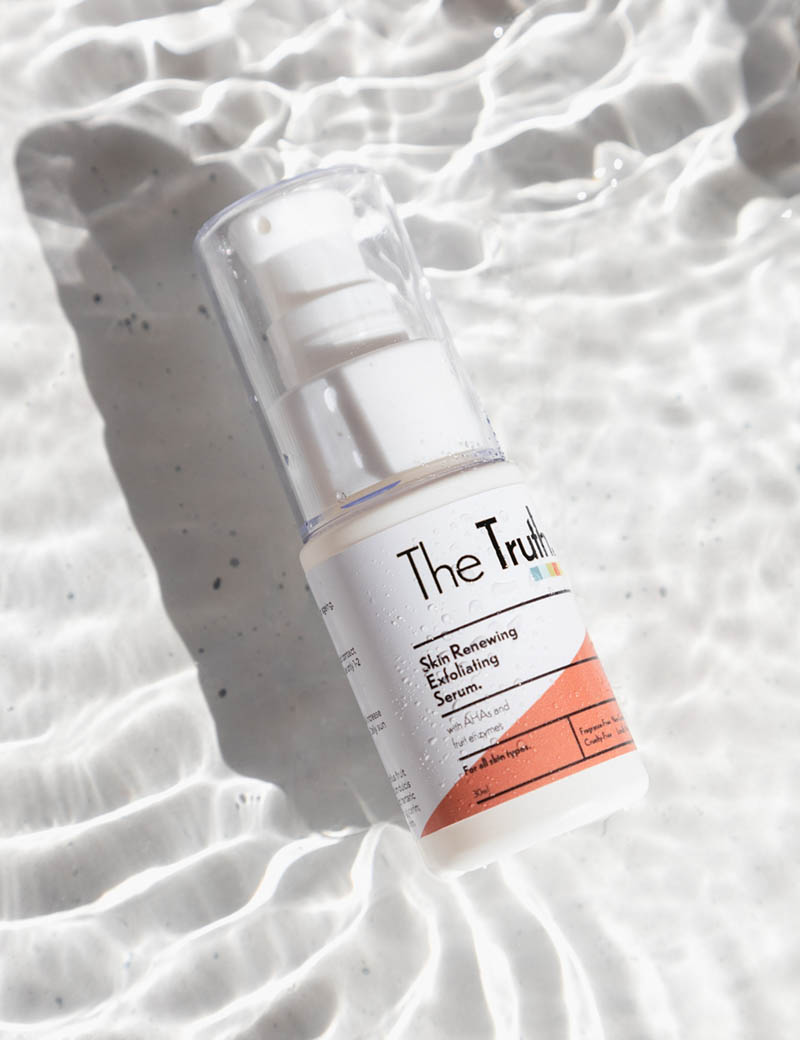
The Truth - Skin renewing exfoliating serum

To improve signs of aging, exfoliation is one of the best methods. As the skin ages, it often becomes dull and loses its brightness. Exfoliating helps by shedding dead skin cells from the surface of the skin, promoting a brighter and more even skin tone.

For younger-looking skin, we recommend using chemical exfoliants like alpha hydroxy acids (AHAs), poly hydroxy acids (PHAs), and a beta hydroxy acid (BHA). Instead of physical exfoliants like scrubs, which can be irritating and abrasive to the skin and worsen the effects of aging.

Some common AHAs to use are glycolic acid and lactic acid, and for PHAs, you can use gluconolactone and lactobionic acid. For a beta hydroxy acid, salicylic acid is a good choice.

Stay in the know

Sign up to our newsletter for specials!

Hyaluronic acid for aging, and moisturizing in general

The Truth Hyaluronic acid Contents

To understand the benefits of hyaluronic acid, it’s important to first recognize the significance of moisturizing for anti-aging. Dry skin is more susceptible to wrinkles and fine lines, making moisturizing a crucial step. Hyaluronic acid is particularly beneficial for dry skin, as it effectively plumps and protects the skin from water loss. Additionally, it works to enhance hydration by retaining water on the skin’s surface.

Stay in the know

Sign up to our newsletter for specials!

Retinol, best ingredient for aging skin?

The Truth Skin Care 101 Individual Retinol, best ingredient for aging skin #2

Retinol, a powerhouse ingredient for anti-aging. Retinol is a derivative of vitamin A and has so many benefits but when looking at it for anti-aging, it really is the number 1 ingredient in our opinion.

Retinol has many benefits which help to improve aging, the ingredient helps to increase collagen production, increase skin cell turnover, brighten the skin, improve skin texture, decrease large pores, improve fine lines and wrinkles.

Stay in the know

Sign up to our newsletter for specials!

Anti-aging secrets and tricks

The Truth - Hydrating cleanser

There are many ways to slow down the signs of aging, including avoiding things that damage our skin.

So firstly, what are some things to do and not to do in your life that can help to reduce premature aging and ultimately to age better?

  • Use a sunscreen everyday
  • Stop smoking, smoking causes wrinkles and a dull complexion
  • Wear sunglasses, this will help you to not make as many unnecessary facial expressions that can cause wrinkles and fine lines
  • Avoid consumption of excessive alcohol, it will dehydrate the skin and destroy collagen
  • Avoid excessive consumption of sugar, sugar destroys collagen
  • Eat a diet of nutrient-rich foods, learn more about Diet and skincare here
  • Exercise regularly
  • Moisturize everyday and apply at least twice a day
  • Avoid using sensitizing ingredients that cause irritation like fragrances

Stay in the know

Sign up to our newsletter for specials!

How to shave like a dermatologist

The Truth How to shave like a dermatologist 2

When shaving your beard and facial hair, you may experience skin irritation such as pimples, redness, and bacterial folliculitis. Therefore, it is crucial to learn how to shave properly and effectively, just as a dermatologist would advise. Following specific steps when shaving is essential.

The first step is the preparation

Firstly, it is important to wet your facial hair by applying water to it. This will help to smooth out the strands of hair and make it easier to shave.
Next, you should cleanse your face. It is recommended to use a cleanser to remove any residue from skincare products, sunscreen, and bacteria. This will prevent your pores from becoming clogged after shaving.

The second step is choosing a shaving gel or cream

For a more soothing and effective shaving experience, it’s best to choose a product with simple and gentle ingredients. While some shaving creams and gels may claim to be “soothing,” they often contain irritants like menthol, denatured alcohol, peppermint oil, and fragrances. These ingredients may create a temporary cooling sensation on the skin, but they can worsen redness and increase the likelihood of breakouts. To truly soothe and protect your skin, look for products that are fragrance-free and free of harsh alcohols and menthol.

Opt for shaving gels and creams that contain aloe vera or nourishing vitamins. Your skin will thank you!

The third step is choosing a razor

Choosing the right razor is crucial for a good shaving experience. The razor you use affects the quality of your shave, which is tied to your skin type and the avoidance of irritation and breakouts.

Non-electric razors with more blades give a closer shave but can cause more irritation, particularly for those with sensitive skin. It’s best to use razors with 1-2 blades to avoid irritation. Remember to replace your razor blades regularly, at least once a month, to prevent bacteria build-up and bluntness, which can cause more irritation. Keep your razor dry and clean to avoid rusting and harbouring more bacteria. Alternatively, you can use an electrical razor, but remember to change the razor head often, clean it after shaving, and keep it dry. With an electric razor, you can skip shaving cream or gel and use only water for preparation.

The next step is the mechanics of shaving.

When it comes to shaving, it’s best to go with the grain, which means shaving in the direction of hair growth. Shaving against the grain might give you a closer shave, but it can also lead to more irritation. If you’re not satisfied with the results after shaving with the grain, you can try going against the grain with quick, short movements of the razor. However, be cautious as there is a risk of cutting yourself. If you’re using an electric razor, the direction doesn’t matter.

The last step is aftercare.

To prevent irritation and ingrown hairs, it’s important to focus on using the right product. While some after-shave products claim to remove debris and avoid infections, they often contain drying alcohols and fragrances that can irritate – especially if you have sensitive skin.

Instead, we recommend using a facial cleanser with salicylic acid or benzoyl peroxide to remove debris, oil, and bacteria. Salicylic acid helps to exfoliate and prevent clogged pores, while benzoyl peroxide effectively kills acne-causing bacteria. Finish with a gentle, fragrance-free moisturizer that contains antioxidants to replenish and calm the skin. Niacinamide is a recommended ingredient in a moisturizer, like our Daily moisturizer.

Stay in the know

Sign up to our newsletter for specials!

How to care for red and sensitive skin

The Truth - How to care for red and sensitive skin - 2

Having sensitive skin can be difficult when it comes to finding products that do not worsen sensitivity. Although there are many causes, there are some important things to avoid which are triggers that worsen sensitive skin and some basic tips for sensitive skin.

What to avoid if you have sensitive skin:

  • Avoid fragrances, use fragrance-free products
  • Use chemical exfoliants instead of physical exfoliants
  • Avoid drying alcohols such as denatured alcohol, SD alcohol and isopropyl alcohol

Tips for sensitive skin:

  • Use hydrating ingredients
  • Use antioxidants like vitamin c and niacinamide (vitamin b3)

Stay in the know

Sign up to our newsletter for specials!

How to treat a sunburn

The Truth - How to treat a sunburn - 2

How to treat and take care of a sunburn

Sunburns are not fun and are dangerous because each time a sunburn occurs, it signifyingly increases your skin’s risk of skin cancer. Now you can’t technically treat a sunburn but in essence by addressing the symptoms you effectively treat what the sunburn is causing. So, how to “treat” one?

Well, in the first place ensure that you do not get burned, always wear a broad-spectrum sunscreen with at least 30+ SPF but preferably 50+ SPF when out in direct sunlight. If you do get sunburned, then follow the steps below to best manage symptoms and “treat” your sunburn.

If sunburned, consider the following:

  • Stay out of direct sunlight for the next few days while your sunburn recovers.
  • Drink lots of water to avoid dehydration.
  • Use a cool compass on the burned area.
  • Use an after-sun product with aloe vera and other soothing ingredients.
  • Use a plain fragrance-free moisturizer on the burned area and apply as many times as needed.
  • If your skin is peeling then after 24 hours of the burn, use petrolatum jelly to start healing the tissue.

If using aloe vera, ensure you use an actual product with aloe vera formulated in it and not the actual plant because the aloe vera plant has something called anthraquinones and they can cause irritation or an allergic reaction.

Stay in the know

Sign up to our newsletter for specials!

The difference between UVA and UVB

The Truth The difference between UVA and UVB 2

The difference between UVA and UVB

Most people are aware of the harmful effects of UVA and UVB rays from the sun. Knowing the difference between the two can help you achieve your skincare goals, especially if you’re concerned about aging or hyperpigmentation.

UVA rays are responsible for causing aging, while UVB rays can lead to skin cancer. The crucial difference between them is that UVA rays can penetrate windows, while UVB rays are blocked by them. This means that even when you’re inside your house, car, or workplace, you’re still exposed to UVA rays if you’re sitting near a window with direct sunlight. This is an important factor to consider because UVA exposure can contribute to premature aging.

To protect your skin from damage, it’s essential to wear sunscreen whenever you’re outside, even if you’re not directly in the sunlight. By being aware of the different types of sun rays and their effects, you can take better care of your skin and maintain a healthier, and more youthful appearance. Make sure you use a broad-spectrum sunscreen which means that the product protects from both UVA and UVB rays.

Stay in the know

Sign up to our newsletter for specials!

Types of sunscreens, chemical and mineral.

The Truth - Types of sunscreen, chemical vs mineral - 2

Types of sunscreens, chemical and mineral.

There are two types of sunscreens, namely, chemical and mineral. There has been much debate around both these types of sunscreens. So, which one is better?

Firstly, both types of sunscreens are as effective, one is not more effective against the sun in comparison to the other. Yet, both are formulated with different active UV filters.

Mineral sunscreens are formulated with inorganic filters that reflect sunlight. They create a barrier that then reflects the UV light off your skin, the UV filters essentially sit on top of the skin and block and reflect the UV rays. Mineral sunscreens are recommended for people with sensitive skin and acne-prone skin because often they are formulated with the active UV filter zinc oxide which can help with acne.

Chemical sunscreens are formulated with organic filters that absorb the UV light; they essentially absorb UV rays like a sponge.

As always, we recommend that whatever sunscreen you use, regardless whether it is mineral or chemical, it must be non-comedogenic and work for you, depending on your skin type and the skincare concern you might want to address, you can choose a sunscreen accordingly.

Stay in the know

Sign up to our newsletter for specials!

Causes of dark circles

The Truth Causes of dark circles

Dark circles are a common issue many people face and deal with. And there are a variety of causes.

They include:

  • Sun damage underneath eyes.
  • Use of irritating ingredients.
  • Use of fragrances.
  • Dry skin.
  • Genetics.

So, there are ways to address dark circles, the amount of sleep you get, or diet will not make a difference but if you are struggling with dark circles, use a moisturizing eye cream with skin brightening ingredients; these ingredients include niacinamide and vitamin c. Along with avoiding fragrances.

Stay in the know

Sign up to our newsletter for specials!

Dry lips

The Truth Dry Lips

Many people struggle with dry lips, especially during the winter season. However, it is important to use the right ingredients to treat dry lips effectively. Many lip balms contain harmful ingredients that can worsen dryness and cause other issues.

Dry lips can be caused by a variety of factors, including sun damage, environmental changes, and certain medications. However, it is important to note that some lip balm ingredients can also contribute to dryness and irritation. Ingredients like fragrance, menthol, camphor, peppermint oil, mint oil, cinnamon, and propolis should be avoided.

Contrary to popular belief, using lip balm does not lead to addiction. However, if you use products with ingredients that worsen dryness, you may find yourself applying more and more balm to address the issue.

To effectively treat dry lips, it is best to use products with petrolatum jelly. This ingredient is an occlusive agent, meaning it creates a protective barrier to trap moisture and hydration and soothe dry lips.

Stay in the know

Sign up to our newsletter for specials!

Dry skin and acne

The Truth Dry skin and acne

Now, we can imagine how frustrating this can be. Most people with acne have oily skin but there are some people who have dry skin and acne, to address this effectively, you need to approach the “game plan” in a unique way.

If this is the case for you, there are a few things you need to incorporate into your routine and certain types of products you should use. Firstly, you should look for a moisturizer that contains niacinamide, niacinamide helps to control oil production which will help manage acne breakouts yet at the same time is a moisturizing ingredient. Check out our Daily moisturizer which has niacinamide. Secondly, be gentle with the products that you use, do not overuse certain active ingredients such as different exfoliating acids, and look for wash-off salicylic acid products which can minimise the potential drying effects of salicylic acid while still getting the benefits of the ingredient.

Stay in the know

Sign up to our newsletter for specials!

Hyaluronic acid and dry skin

The Truth Skin Care 101 Individual Hyaluronic acid dry skin #2

Hyaluronic acid has become a popular ingredient lately, and for good reason. It is a powerful ingredient that moisturizes and hydrates the skin. But what is hyaluronic acid and how does it work?

Firstly, hyaluronic acid is a substance that occurs naturally in our skin. Our skin produces it, making it an amazing and essential ingredient for our skin. Adding more of it with a skincare product such as a moisturizer provides incredible benefits to the skin. Hyaluronic acid is a humectant that can hold up to 1000 times its weight in water, making it an optimal hydrator for all skin types and a go-to ingredient for dehydrated skin. It effectively moisturizes the skin and improves its softness.

Hyaluronic acid is a must-have in every skincare routine, especially for combating dryness. It not only moisturizes and softens the skin but also hydrates it. As a humectant, it can prevent water loss and draw in water, replenishing the skin and combating any damage caused by harsh and irritating ingredients, sun damage, and sunburns.

Stay in the know

Sign up to our newsletter for specials!

How to care for dry skin

The Truth Skin Care 101 Individual How to care for dry skin #2

If you have dry skin, even applying lotion frequently may not be enough to keep it moisturized. To address the underlying issues causing dryness, it’s important to use a rich moisturizer at least twice a day and as needed. Additionally, you can consider incorporating these adjustments into your skincare routine for better results.

Common causes of dry skin:

  • The skin barrier has been damaged and disrupted.
  • The use of harsh and drying ingredients.
  • Physical and abrasive exfoliant scrubs.
  • Sun damage and sunburns.

Bad habits that worsen dry skin or even trigger dry skin:

  • Over cleansing
  • Not moisturizing with damp skin

To prevent dry skin, it’s important not to over-cleanse and to moisturize when your skin is damp. If you’re experiencing tightness and dryness, it could be due to other causes.

Try using a fragrance-free hydrating cleanser. Avoid using active ingredients in serums and exfoliants and focus on moisturizing with ingredients like hyaluronic acid to help the skin retain moisture and recover. Additionally, use a moisturizing sunscreen to protect your skin.

Stay in the know

Sign up to our newsletter for specials!

Why exfoliate

The Truth Skin Care 101 Individual Why exfoliate #2

Why exfoliate, how to choose the right exfoliant and how to exfoliate safely like a dermatologist

Exfoliation can sometimes be daunting. Firstly, if you see the word “acid”, do not fear. Exfoliating acids are chemical exfoliants and if you want to learn the difference between chemical and physical exfoliants then be sure to check out our Chemical vs physical exfoliants.

Firstly, why exfoliate? Exfoliating has so many amazing benefits for the skin. Exfoliating with ingredients such as a beta hydroxy like salicylic acid, alpha hydroxy acids (AHAs) like glycolic acid and lactic acid as well as poly hydroxy acids (PHAs) can improve and help address many different skincare concerns or just help you to achieve brighter and more radiant-looking skin. Exfoliating helps to increase skin cell turnover and shed and dissolve dead skin cells on the skin surface or even within the pore to help brighten and even out skin tone, reveal younger and more radiant-looking skin, improve texture for smoother skin, provide anti-aging benefits, improve sun-damaged skin, and help with acne breakouts.

The key is to choose the right chemical exfoliant for your skin type and specific concern/concerns. There are 3 different types of chemical exfoliants and choosing the right exfoliant from each type will help you achieve the most out of your exfoliating. The first type of chemical exfoliants is your beta hydroxy acid (BHA) and there is only one BHA, salicylic acid. If you have oily/acne-prone skin and you want to address and clear your acne, then this will be the right exfoliant for you as salicylic acid works by dissolving the bonds that hold dead skin cells to the skin surface and it is also oil soluble which means it can penetrate the pore and exfoliate all the dead skin cells from inside the pore, making it an effective ingredient for all acne breakouts.

The second type of chemical exfoliants are alpha hydroxy acids (AHAs). The most common AHAs found in skincare products are glycolic acid and lactic acid, other ones include malic acid, tartaric acid, and citric acid. AHAs can be used for all skin types except we caution their use for sensitive skin types as it could potentially be too harsh. AHAs work to shed dead skin cells from the skin’s surface.

The third and last type of chemical exfoliants are poly hydroxy acids (PHAs), these commonly include gluconolactone and lactobionic acid. These act in the same way as AHAs to shed dead skin cells but because these acids have the largest molecule structure, they will not penetrate the skin as well as an AHA. This doesn’t mean that it makes the ingredients less effective, it means however that it has the lowest risk of causing irritation and sensitivity which means that PHAs are the recommended chemical exfoliant group for all people with sensitive skin.

And finally, how can you exfoliate like a dermatologist? We recommend starting slowly to allow your skin time to adapt to the new ingredients and the process of exfoliating which increases your skin cell turnover rate. With salicylic acid, which is a beta hydroxy acid, you can use this every day particularly if you are using the ingredient for acne. For other exfoliating acids such as AHAs and PHAs, we recommend using only 2-3 times a week at most.

For an elevated exfoliating tip, put petrolatum jelly around your eyes as the skin in these areas is sensitive and can be negatively affected when exfoliating.

Stay in the know

Sign up to our newsletter for specials!

Chemical vs physical exfoliants

The Truth Chemical vs physical exfoliants

When it comes to exfoliating, there are two types to consider: physical and chemical. Physical exfoliants use beads to scrub away dead skin cells, but they can be damaging to the skin and cause inflammation and dryness. Therefore, we recommend chemical exfoliants for the face.

We recommend chemical exfoliants because they give an even and gentle exfoliation compared to physical exfoliants which result in an uneven exfoliation process of the skin.

Chemical exfoliants break up the bonds between skin cells, revealing new, healthy skin cells.

There are different types of exfoliating acids, each with its benefits. A beta hydroxy acid (BHA), like salicylic acid, is great for oily and acne-prone skin. Alpha hydroxy acids (AHAs), such as glycolic and lactic acid, are also popular choices. Poly hydroxy acids (PHAs), like gluconolactone and lactobionic acid, are another option. Physical exfoliants can be better for body exfoliation.

Why exfoliate, how to choose the right exfoliant, and how to exfoliate safely like a dermatologist.

Exfoliation can seem overwhelming at times, especially when you come across the word “acid”. But don’t worry, exfoliating acids are chemical exfoliants.

Exfoliating has numerous benefits for the skin. By using ingredients such as salicylic acid, alpha hydroxy acids (AHAs) like glycolic acid and lactic acid, as well as poly hydroxy acids (PHAs), you can address various skincare concerns, namely, achieve brighter and more radiant-looking skin, improve texture for smoother skin, and even provide anti-aging benefits.

Exfoliating increases skin cell turnover and removes dead skin cells from the skin’s surface and pores to reveal younger, more radiant-looking skin, improve skin tone, and help with acne breakouts and sun-damaged skin.

Choosing the right chemical exfoliant for your skin type and specific concerns is crucial.

There are three types of chemical exfoliants: a beta hydroxy acid (BHA), alpha hydroxy acids (AHAs), and poly hydroxy acids (PHAs). Salicylic acid is the only BHA, and it is the right choice for oily/acne-prone skin. AHAs, such as glycolic acid and lactic acid, can be used for all skin types except for sensitive skin. PHAs, including gluconolactone and lactobionic acid, are the recommended chemical exfoliant group for people with sensitive skin.

If you want to exfoliate like a dermatologist, start slowly to allow your skin to adapt to the new ingredients and process. You can use salicylic acid every day, especially for acne. For other exfoliating acids like AHAs and PHAs, it’s best to use them only 2-3 times a week at most. When exfoliating, it’s crucial to protect the sensitive skin around your eyes by applying petrolatum jelly.

Stay in the know

Sign up to our newsletter for specials!

Ingredients to use

The Truth Acne Scarring

When choosing ingredients to address hyperpigmentation, there are different ways to approach it. You can choose ingredients that target the “pigment” production which in essence is looking for ingredients that inhibit the production of either melanosome or tyrosinase, if you struggle with hyperpigmentation this will help to decrease the overproduction of these pigments to lighten and even out those dark spots and even out your skin tone. Another way to address hyperpigmentation is to use ingredients that increase skin cell turnover to get rid of the old and bring in the new, essentially.

Ingredients that work to inhibit the production of the amount of pigment being produced:

  • Retinol
  • Niacinamide
  • Vitamin C
  • Azelaic acid
  • Kojic acid

Ingredients that increase skin cell turnover:

  • Alpha hydroxy acids (AHAs) such as glycolic acid and lactic acid
  • A beta hydroxy acid (BHA), that will be salicylic acid
  • Poly hydroxy acids (PHAs) such as gluconolactone
  • Retinol

But most importantly, you need to wear sunscreen. Sun damage and exposure to the sun without using sunscreen worsens the hyperpigmentation and any dark spots.

Stay in the know

Sign up to our newsletter for specials!

Causes of hyperpigmentation

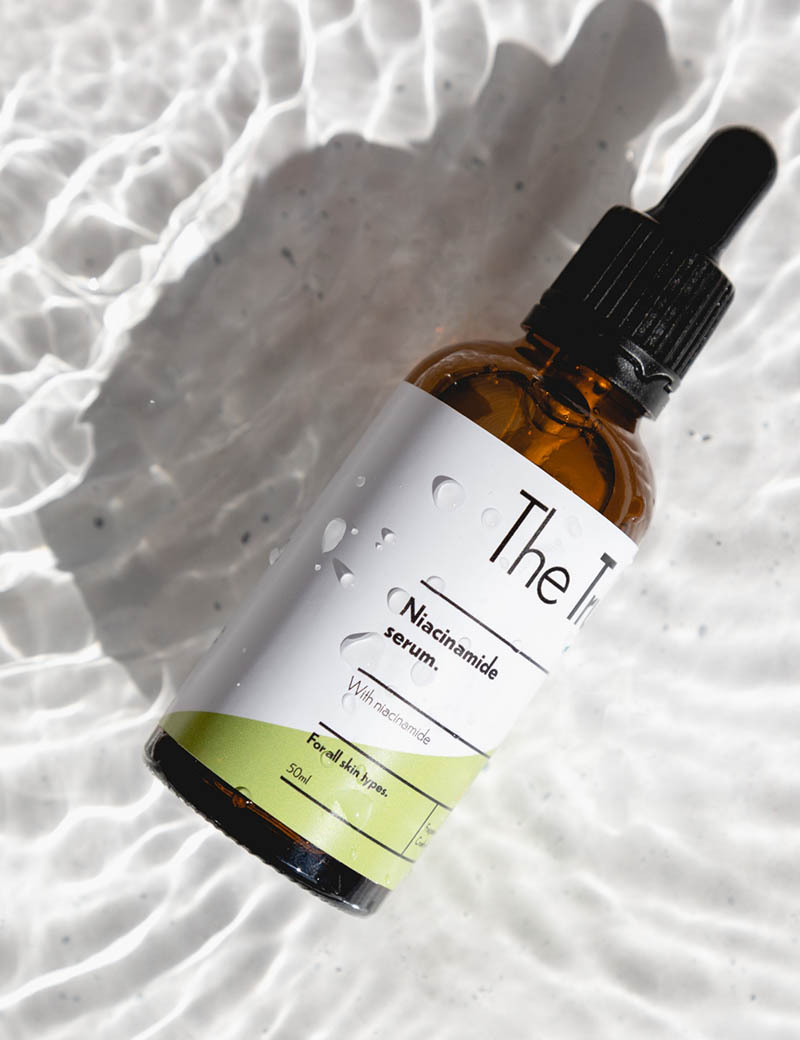
The Truth - Niacinamide serum

Hyperpigmentation refers to any skin concern where a person’s skin tone is uneven or discoloured. The causes of hyperpigmentation vary depending on the type, but the most common ones are acne, age, and sun damage.

Acne can leave behind red or dark spots that cause discoloration and unevenness in the skin tone. As we age, our skin’s natural cell turnover rates decrease, leading to a dull and uneven complexion. Age spots caused by melasma are also common in aging skin. Sun damage can also contribute to hyperpigmentation if proper sun protection measures are not taken.

To treat hyperpigmentation, it is crucial to address the underlying cause before treating the actual condition. If your hyperpigmentation is caused by acne for example, then you need to treat your acne first.

There are many ways to treat hyperpigmentation, including various ingredients, but identifying the root cause is the best way to combat it effectively.

Ingredients to use to address hyperpigmentation.

If you’re dealing with hyperpigmentation, there are different approaches you can take when selecting ingredients. One approach is to choose ingredients that target pigment production by inhibiting the production of melanosome or tyrosinase. This can help reduce the overproduction of pigment to help lighten, and even out dark spots for a more even and brighter skin tone. Another approach is to use ingredients that increase skin cell turnover, helping to remove old skin cells and bring in new ones.

Ingredients that inhibit the production of excess pigment:

  • Retinol
  • Niacinamide
  • Vitamin C
  • Azelaic acid
  • Kojic acid

Ingredients that increase skin cell turnover:

  • Alpha hydroxy acids (AHAs) such as glycolic acid and lactic acid
  • A beta hydroxy acid (BHA), that will be salicylic acid
  • Poly hydroxy acids (PHAs) such as gluconolactone
  • Retinol

It is crucial to wear sunscreen as unprotected sun exposure exacerbates hyperpigmentation and dark spots caused by sun damage.

Stay in the know

Sign up to our newsletter for specials!

Acne scarring

The Truth Acne Scarring

Before we discuss acne scarring, it’s important to understand the different types. There are two: pigment scarring and texture scarring. Pigment scarring involves changes in skin colour after an acne breakout and has two subtypes: post-inflammatory erythema (red spots) and post-inflammatory hyperpigmentation (dark spots). Regardless of subtype, both require the same treatment.

Texture scarring, on the other hand, is considered “true” scarring and occurs with severe, deep inflammatory cystic acne. These scars are difficult to treat and may require medical and cosmetic procedures.

To address pigment scarring, the best approach is to increase skin cell turnover using ingredients like retinol, chemical exfoliants like a beta hydroxy acid (BHA), alpha hydroxy acids (AHAs), and poly hydroxy acids (PHAs), and ingredients that decrease pigment production like retinol, vitamin C, niacinamide, azelaic acid, and kojic acid. It’s important also to use sunscreen to prevent sun damage and sunburn, which can worsen hyperpigmentation.

While pigment scarring can resolve on its own over time, it can take 3-6 months or up to a year, depending on the type of acne and how much it was picked at. It’s best to avoid picking at pimples to prevent worsening acne scarring/hyperpigmentation.

In summary, understanding the type of acne scarring is important in determining the best treatment approach. Pigment scarring can be addressed with active ingredients to increase skin cell turnover and decrease pigment production, while texture scarring requires medical and cosmetic procedures.

Stay in the know

Sign up to our newsletter for specials!

How to get rid of blackheads

The Truth - How to get rid of blackheads - 2

Ahh, blackheads. Common and stubborn. So, what are they and how do they form?
Blackheads are formed when dead skin cells mix with excess oil (sebum) and other debris within a pore, causing it to become clogged. When this mixture reaches the surface of the pore, it oxidizes and turns black. Blackheads are commonly found in oily areas like the T-zone (forehead, nose, and chin).

However, popping or extracting them can cause damage and scarring, leading to a worse and more inflamed breakout. Instead, it’s important to establish a routine that effectively cleanses and clears dead skin cells, excess oil, and built-up debris by exfoliating regularly.

Salicylic acid is the go-to ingredient for getting rid of blackheads. Using a cleanser with salicylic acid once a day or up to three times a week can be effective. Niacinamide and clay masks can also help control and reduce excess oil.

To prevent blackheads from forming, it's best to avoid certain actions that can worsen the problem. These include:

  • Avoid using harsh drying alcohols such denatured alcohol, SD alcohol and isopropyl alcohol.
  • Essential oils.

Stay in the know

Sign up to our newsletter for specials!

Acne tips and tricks

The Truth - Acne tips and tricks - 2

Acne management involves more than just using active ingredients. Small details and habits can make a big difference in effectively clearing your acne while avoiding bad habits that worsen your skin. It’s important to incorporate positive habits that benefit your skin as well.

So, things to avoid and stop doing:

  1. Stop touching your face, this will help to not spread bacteria and worsen breakouts.
  2. Do not pop your pimples, this can increase bacteria growth and the pimple could get more inflamed which can increase the risk of scarring.
  3. Avoid using products that contain ingredients such as denatured alcohol, SD alcohol, and isopropyl alcohol which can all dry out your skin and cause your skin to produce even more oil (sebum).
  4. Reduce your intake of excessive amounts of sugar which can increase oil production.
  5. Do not spot-treat your acne, instead of waiting for a breakout to appear before using an active ingredient on the breakout, incorporate an anti-acne ingredient consistently into your routine that is applied to the entire skin to help clear your acne.

Now some acne tips and tricks to incorporate into your skincare routine:

  1. Use a separate washcloth to dry your skin after cleansing and wash this cloth at least once a week and keep it dry after use.
  2. Wash your pillowcase and bed sheets at least once a week. Use a gentle detergent when doing so.
  3. Remove all makeup before bed.
  4. Be patient and consistent with an anti-acne routine, full results can take up to 3 months.
  5. Do not incorporate too many active ingredients at once, to avoid irritation and sensitivity

Stay in the know

Sign up to our newsletter for specials!

Dry skin and acne

The Truth Skin Care 101 Individual Dry skin acne #2

Dealing with acne can be a frustrating experience, especially when you have dry skin. While most people with acne have oily skin, addressing dry-skin acne requires a unique approach.

To effectively manage dry-skin acne, there are a few things you should incorporate into your routine and certain products you should use.

Firstly, it’s important to look for a moisturizer that contains niacinamide. This ingredient helps to control oil production, which in turn helps to manage acne breakouts. At the same time, niacinamide also acts as a moisturizing ingredient for the skin, keeping your skin hydrated. Our Daily Moisturizer is a great option that contains niacinamide.

Secondly, it’s essential to be gentle with the products you use. Avoid overusing certain active ingredients, such as exfoliating acids. Instead, opt for wash-off salicylic acid products that minimize the potential drying effects of the ingredient.

By incorporating these basic factors into your anti-acne routine, you can effectively manage dry-skin acne.

Stay in the know

Sign up to our newsletter for specials!

Causes of acne

The Truth - Acne tips and tricks - 2

Acne has four primary causes, but each of these causes have sub-causes that can trigger acne breakouts. The first cause is excess oil production, which is mediated by hormones and starts during puberty when oil glands become active. Hormones cause an increase in sebum production, which leads to the second cause of clogged pores. When oil production increases, the pores get blocked by oil, and skin cells become sticky, resulting in clogged pores.

The third cause is bacterial overgrowth. Everyone has bacteria on their skin.

C. Acnes is the type of bacteria that causes acne, and it multiplies rapidly when there is a perfect mixture of increased oil production and clogged pores. This leads to the fourth cause, inflammation, which occurs when immune cells attack the bacteria and cause inflammation to build up around the affected area.

To address acne, it is essential to know the active ingredients that target each of these causes. It is vital to choose the right ingredients to clear up acne effectively. Certain foods can trigger acne by increasing oil production and causing inflammation.

Foods to avoid include those with high sugar content, whey protein, and vitamin B12 supplements. It is best to check your diet and avoid any food that you notice is causing acne breakouts. While there have not been many conclusive studies on diet and acne, avoiding certain foods can help prevent acne breakouts.

Click here to learn How to get rid of acne.

Stay in the know

Sign up to our newsletter for specials!

How to get rid of acne

The Truth Skin Care 101 Individual How to get rid of acne #2

Acne is a complex issue, so it’s no surprise that many people wonder how to get rid of it. The key is to use skincare ingredients that specifically target acne. While having a great cleanser, serum, and moisturizer is important, they won’t make a difference for your acne if they don’t contain the right ingredients. Here are some of the main ingredients you should incorporate into your routine:

  • Salicylic acid
  • Retinol
  • Benzoyl peroxide
  • Azelaic acid
  • Niacinamide

These ingredients can be found in various skincare products, including cleansers, serums, spot treatments, and moisturizers. However, be careful not to mix these ingredients at the same time, as this could cause irritation. The only ingredient you can use at the same time, i.e., both in the morning or evening is niacinamide. The rest must be used at different times, i.e., one in the morning and then the other in the evening or vice versa.

Additionally, depending on your skin’s sensitivity, you may need to avoid certain ingredients altogether, even if used at different times of the day. As long as you’re cautious and pay attention to your skin’s needs, these ingredients are generally safe to use together in your skincare routine at different times.

Stay in the know

Sign up to our newsletter for specials!

Acne myths

The Truth - Acne cleanser

There is a lot of misinformation about acne and its causes and treatments that have spread on social media. Therefore, we must dispel some myths about acne.

Myth 1: You can dry up your acne, or you must dry out your skin as much as possible to get rid of all the excess oil.

There is a common misconception that people with oily skin should dry out their skin to prevent acne breakouts. However, this is not true and can lead to more breakouts. Our skin naturally produces oil, called sebum, which helps moisturize and condition the skin.

If you use harsh products or over-cleanse your skin, you can damage the skin barrier, making it difficult for the skin to fight off environmental damage and lead to more acne breakouts. Additionally, drying out your skin too much can cause it to produce even more oil to compensate, leading to excessive oil production and more breakouts. Instead, it is important to be gentle with your skincare routine and avoid over-exfoliating. Use proven ingredients and be careful not to irritate your skin.

Myth 2: Drinking water improves acne.

There is a popular misconception that drinking water can help clear up acne. However, this is not true. Acne is caused by four main factors: excess oil production, clogged pores, bacteria, and inflammation. Drinking water does not directly address any of these causes. While staying hydrated is important for overall health, it is not a cure for acne.

Myth 3: Acne only affects teenagers.

Acne is not just a problem for teenagers; it can occur at any age. Adults in their 20s, 30s, 40s, 50s, and 60s can also experience acne. To effectively treat acne, regardless of age, it is important to understand its main causes.

The primary causes of acne are the overproduction of oil, clogged pores, bacteria, and inflammation. While overproduction of oil is most common in teenagers, adults in their 30s, 40s, 50s, and 60s can also experience oily skin.

Bacteria, specifically P. Acnes on our skin, can contribute to the formation of acne breakouts.

Clogged pores are a result of not exfoliating and of our skin cells sticking together which is a common after-effect of oily skin, and as we age, our natural skin cell turnover rate slows down, potentially leading to clogged pores.

Inflammation can be caused by many factors such as diet and skin injuries.

To clear your acne at any age, it is recommended to follow a consistent routine with specific ingredients that target acne. Such as:

  • Salicylic acid
  • Benzoyl peroxide
  • Azelaic acid
  • Retinol

Myth 4: Sunlight improves acne

Although sunlight can help to dry out acne and certain wavelengths can activate responses that kill acne-causing bacteria, relying on the sun to improve your acne is not advisable.

Sunlight and sun exposure without the use of a broad-spectrum sunscreen can cause inflammation and redness, which are major causes of acne and can lead to more breakouts.

To manage the positive effects of blue-light wavelengths without encountering the negative effects of sunlight-induced inflammation, it is recommended to use LED light therapy. However, it is not worth risking the potential damage that the sun can cause to your skin.

Myth 5: People with oily skin do not need to moisturize.

It’s a common myth that people with oily skin don’t need a moisturizer. The reasoning behind this is twofold.

Firstly, those with oily skin often believe that moisturizers will make their skin even oilier.

Secondly, older moisturizers were often heavy and didn’t work well on oily or acne-prone skin. However, modern moisturizers are non-comedogenic and full of ingredients that help control oil production and protect the skin barrier, which is especially important for those with oily or acne-prone skin.

It’s important to note that acne can be caused by the overproduction of oil. Many acne treatments can cause dryness, and people often try to dry out their skin as much as possible, which can lead to more oil production and hence more acne. To combat this, it’s important to moisturize regularly. Additionally, some acne treatments can cause excessive dryness, which can lead to inflammation. Moisturizing with a barrier-repairing ingredient like niacinamide can help combat this and control oil production.

Myth 6: Washing your face more will clear your acne.

Cleansing is an important step in any skincare routine, but this can also be the harshest on the skin compared to other steps. It’s crucial to use a non-irritating cleanser that contains hydrating ingredients to protect your skin barrier. Many people with acne believe that washing their face more often will lead to cleaner skin, but this can cause more harm than good. Over-cleansing can strip the skin of its natural oils, leading to excessive dryness and increased oil production, which can result in more breakouts.

Dermatologists recommend cleansing at most twice a day, but for some, once a day at night may be sufficient. If you have acne, it’s important to use a cleanser with active ingredients like salicylic acid or benzoyl peroxide to treat it effectively.

Stay in the know

Sign up to our newsletter for specials!

Purging vs breakouts

The Truth - Acne cleanser

Purging vs breakouts?

Skin purging has become a popular term to describe the process of experiencing new acne breakouts after using certain active ingredients that exfoliate and increase skin cell turnover. The claim is that these ingredients “purge” the skin of existing clogged pores and bring them to the surface quickly. After the purging wears off, people start seeing amazing benefits from the product and active ingredient. Essentially, it is when your skin gets worse before it gets better.

Skin purging is often caused by an exfoliant such as salicylic acid (BHA), gluconolactone (PHA), glycolic acid (AHA) or using an ingredient that increases skin cell turnover such as retinol. When you use an exfoliant, it sheds and dissolves dead skin cells and brings new skin cells to the surface. This can bring already existing clogged pores to the surface as well. The same applies to retinol, which increases skin cell turnover and reveals new skin cells, bringing any already existing clogged pores to the surface.

Purging can be frustrating because all of a sudden, many new breakouts are forming. However, it is a good sign because it shows that the exfoliant or retinol is working as it’s supposed to. Purging can last up to 4-6 weeks, but after your skin has purged, you will see amazing results as these ingredients work to maintain clear skin and stop new acne breakouts from forming. Do not be tempted to stop using a specific product or ingredient because of a sudden breakout/s occurring. Skin purging is temporary, so stick it out.

Purging won’t happen to everyone, but if it does happen to you, stick it out. To tell if your skin is purging or just breaking out after using a new product or active ingredient, consider the duration and location. Purging typically lasts between 4-6 weeks and only occurs in the locations where you typically get acne. If you experience breakouts anywhere else or after the 4–6-week period, it may be an indication that the product is worsening your acne or not working, and you may need to try another product and active ingredient. Keep in mind that purging only occurs with an ingredient that increases skin cell turnover such as an exfoliant or retinol. A common myth is that niacinamide causes purging, but thankfully, it does not.

Stay in the know

Sign up to our newsletter for specials!